
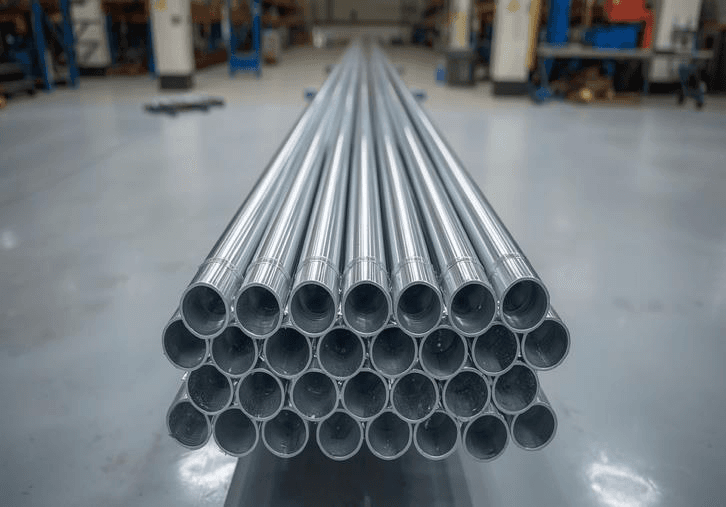
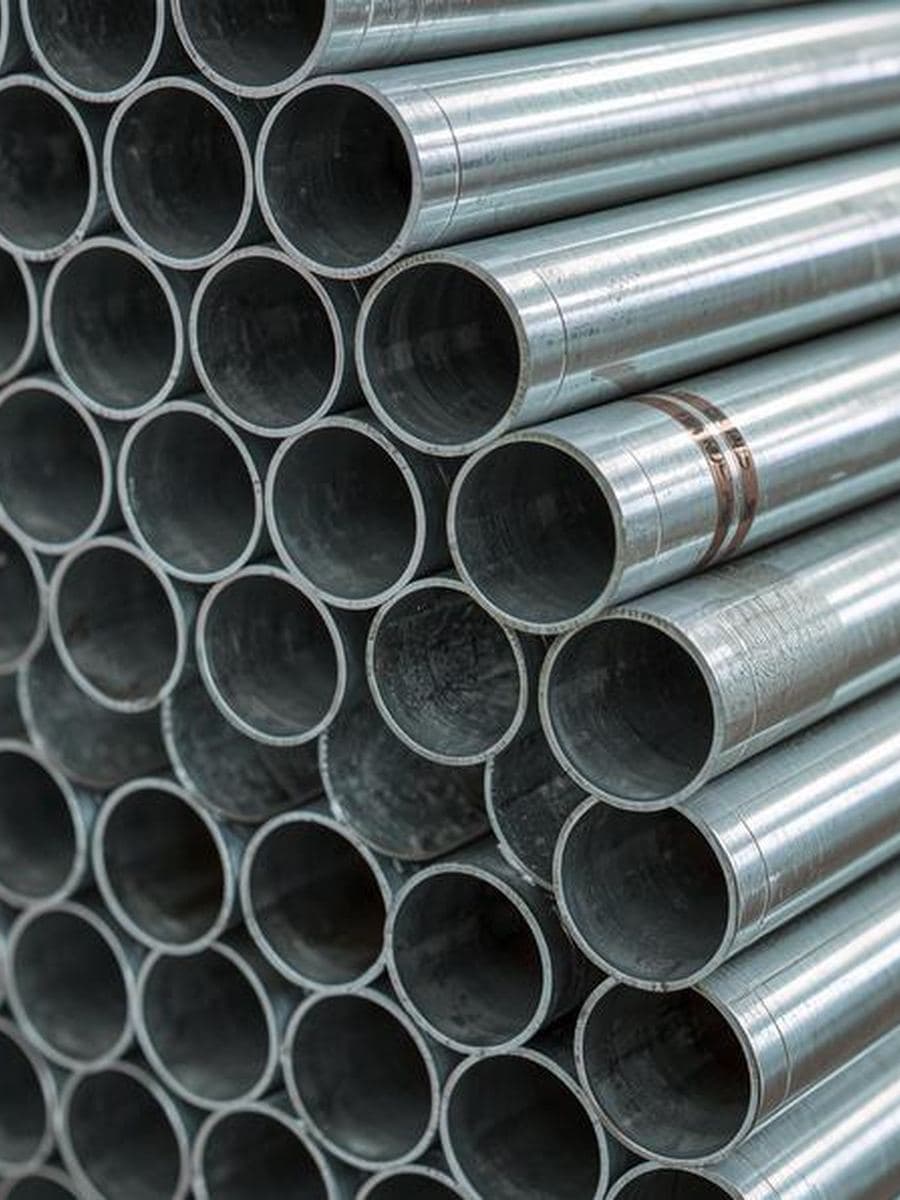
EMT conduit, factory direct by the container
Galvanized thin-wall steel, 1/2" to 4" in 10 ft sticks. Full or mixed container, firm quotes with incoterms.
- Factory direct
- UL 797 / ANSI C80.3
- Real MOQs per size
EMT conduit at a glance
Dimensions by trade size
ANSI C80.3
| Trade size | Outer diameter | Wall | Weight (lb/100 ft) |
|---|---|---|---|
| 1/2" | 0.706" | 0.042" | 29.0 |
| 3/4" | 0.922" | 0.049" | 44.6 |
| 1" | 1.163" | 0.057" | 65.3 |
| 1-1/4" | 1.510" | 0.065" | 96.3 |
| 1-1/2" | 1.740" | 0.065" | 111.1 |
| 2" | 2.197" | 0.065" | 140.4 |
| 2-1/2" | 2.875" | 0.072" | 207.6 |
| 3" | 3.500" | 0.072" | 253.8 |
| 3-1/2" | 4.000" | 0.083" | 332.3 |
| 4" | 4.500" | 0.083" | 373.7 |
Need pricing on EMT conduit?
Send us sizes and quantities. We reply with a firm quote and incoterms.
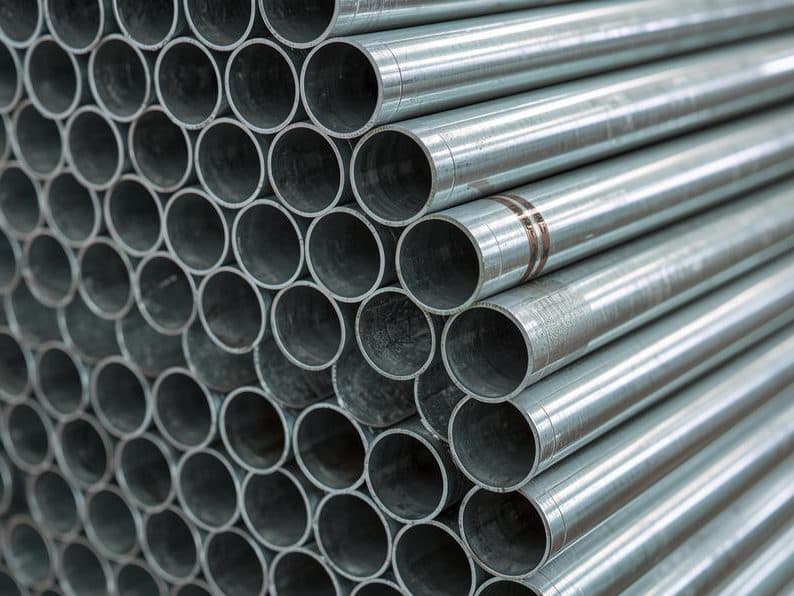
EMT Conduit Up Close
Buying EMT Conduit Wholesale — FAQ
What is EMT conduit and where is it used?
EMT (Electrical Metallic Tubing) is a thin-wall galvanized steel raceway that protects and routes wiring in commercial, industrial, and institutional buildings. It is the most-installed metal conduit in new construction across the Americas because it is light, easy to bend on-site, and cheaper per foot than IMC or RMC. UL 797 listed, ANSI C80.3.
EMT vs IMC vs RMC — which one does the project actually need?
EMT for indoor dry and damp locations — the default for most commercial and institutional buildings. IMC for outdoor exposed runs, parking garages, and industrial spaces where EMT does not meet the spec. RMC where heaviest-wall protection or threaded raceway is required by code. EMT is fine 90% of the time and over-specified the other 10% — the tell is when an outdoor exposed run gets quoted in EMT, which is the spec the project pays for in two years, not at install.
Can EMT conduit be used outdoors?
EMT is listed for dry and damp locations. It works in outdoor covered applications but is not rated for direct burial or continuous wet exposure. In coastal salt air or rooftop runs, expect faster degradation. For those environments, IMC or RMC is the right call — we ship both.
Set-screw or compression — which fittings for EMT?
EMT uses threadless fittings. Set-screw fittings are for dry locations only. Compression fittings are required in wet or damp locations. EMT fittings are not interchangeable with IMC or RMC without adapters — different wall thickness and a different connection method.
Is your EMT conduit UL listed?
Yes — UL 797 listed and ANSI C80.3 compliant. Not "UL-equivalent." For EPCs and institutional projects that require AHJ documentation, we provide the UL certificate and lot-level traceability with the shipment.
What trade sizes are available?
All 10 standard trade sizes per ANSI C80.3: 1/2", 3/4", 1", 1-1/4", 1-1/2", 2", 2-1/2", 3", 3-1/2", and 4". All in 10 ft (3.05 m) sticks. Sizes can mix in a single container without a per-SKU minimum.
How many sticks of EMT fit in a 40 HC container?
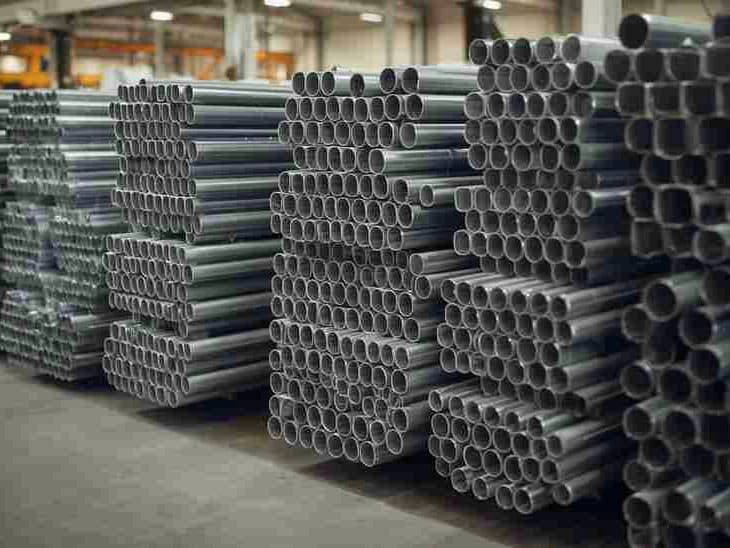
Depends on the size and the bundling. As a working reference: a palletized load of 1/2" EMT runs roughly 15,000 to 20,000 linear feet in a 40 HC, and proportionally less for the larger sizes. Send the size mix and we calculate the optimal load for the destination.
What is the minimum order to buy EMT wholesale by the container?
No fixed minimum on sticks. The honest question is whether the math works for a full container of EMT or whether a mixed container with IMC, THHN, or other electrical materials gets to a better landed cost. Send the size list and the destination — we put together the configuration that gives the best total cost.
Request a Wholesale Quote
Tell us what you need. We come back with a firm quote with incoterms — the team that builds it is the same team that answers your questions.