
THHN/THWN-2 Wire — Direct Import
THHN/THWN-2 is the most-installed building conductor in the Americas. UL 83 listed, 600V, 90°C dry and 75°C wet, with thermoplastic high-heat insulation and a nylon jacket — the default for conduit wiring in commercial, industrial, and infrastructure builds. Voltera imports it direct from the factory in copper and aluminum from 14 AWG through 1000 kcmil.
Most distributors in the region buy the same THHN from the same three suppliers and watch margins shrink. We ship pull boxes, reels, and wooden drums to specialty distributors, EPCs, and project supply buyers across the Caribbean, Central America, and South America — full container or mixed with conduit and other electrical materials. MOQs are real, not policy. Quotes go out in firm with incoterms.
Request a Quote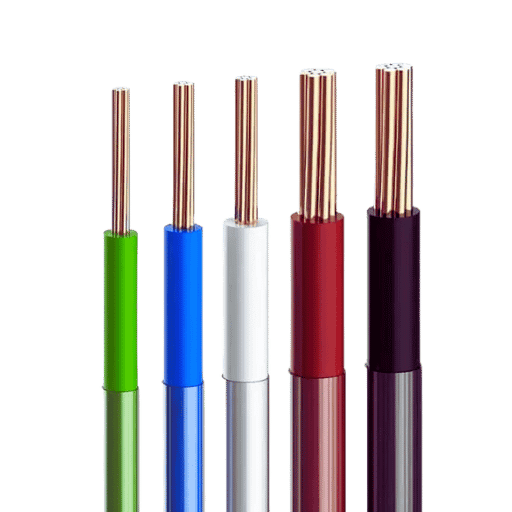
THHN/THWN-2 Wire Specifications
THHN Wire Ampacity Guide
Ampacity values for copper THHN at 90°C dry (NEC Table 310.16). For wet locations, use the THWN-2 column at 75°C.
| Size | Ampacity (90°C) | Typical Use |
|---|---|---|
| 14 AWG | 15A | Branch circuits, lighting |
| 12 AWG | 20A | Outlets, small appliances |
| 10 AWG | 30A | AC units, water heaters |
| 8 AWG | 50A | Ranges, large appliances |
| 6 AWG | 65A | Subpanels, large equipment |
| 4 AWG | 85A | Feeders, service entrance |
| 2 AWG | 115A | Large feeders |
| 1/0 AWG | 150A | Service entrance, feeders |
| 2/0 AWG | 175A | Main feeders |
| 3/0 AWG | 200A | Main service |
| 4/0 AWG | 230A | Large main service |
Buying THHN Wire Wholesale — FAQ
What is THHN wire and where is it used?
THHN (Thermoplastic High Heat-resistant Nylon-coated) is a single-conductor building wire run inside conduit systems. It is the default for commercial, industrial, and infrastructure wiring across the Americas — 90°C dry, 75°C wet when dual-rated as THWN-2, 600V, UL 83. It covers branch circuits, feeders, and service entrances.
What is the difference between THHN and THWN-2?
THHN is rated for 90°C dry only. THWN-2 is rated for 75°C wet or damp. Most wire sold today is dual-rated THHN/THWN-2 with both listings on the jacket. If any part of the run hits a wet location, the entire ampacity calculation drops to the 75°C column per NEC 310.15.
Is your THHN UL-listed or "UL-equivalent"?
UL 83 listed. Not "UL-equivalent" — that is a marketing word for "we hope so." For EPCs and institutional projects that need documentation for the AHJ or insurance, we provide the UL certificate and lot-level traceability with the shipment.
What AWG sizes are available?
14 AWG through 1000 kcmil in both copper and aluminum — the full branch-circuit-to-service-entrance range. Solid for 14–10 AWG, Class B stranded for 8 AWG and larger. Standard NEC color set on the jacket. Mixed AWG, color, and conductor in a single container is fine.
Copper or aluminum THHN — which one for feeders?
Both are valid; the project decides. Copper is the default for branch circuits and shorter feeders where weight and termination labor are not a factor. Aluminum makes sense on long service-entrance and main-feeder runs where the conductor savings outweigh the larger AWG step and the anti-oxidant termination work. For tight conduit fill, copper. For long runs to the main panel, aluminum is often the cheaper landed cost.
Can THHN be used outdoors or in wet locations?
Inside conduit, yes — but the THWN-2 rating governs in any wet or damp section, so derate to 75°C for the whole circuit. THHN is not listed for direct burial or for exposed outdoor use without conduit. For those installations, USE-2 or XHHW-2 are the right types.
What is the ampacity at 12 AWG vs 10 AWG?
At the 90°C column (dry, NEC Table 310.16) copper THHN carries 25A at 14 AWG, 30A at 12 AWG, and 40A at 10 AWG. The breaker still has to match the lower 60°C/75°C terminal rating in most installations — so a 12 AWG circuit ends up on a 20A breaker even though the conductor itself can carry more. The full table is on the page above this section.
What is the minimum order to buy THHN wholesale by the container?
No fixed minimum on units. The real question is whether the math works for a full container or whether a mixed container with conduit or other electrical materials makes more sense for the destination. Send the AWG list, color split, and the destination port — we put together the configuration that gives the lowest landed cost.
Standards & References
Request a Wholesale Quote
Tell us what you need. We come back with a firm quote with incoterms — the team that builds it is the same team that answers your questions.