
HDPE PE 100 Water Pipe — 20 to 110 mm
High-density polyethylene pipe — metric coil pipe — in PE 100 material for potable water. PE 100 is the resin grade, not a commercial number: it sets the design strength the wall is calculated from, and it is what allows pressure classes up to 2.50 MPa in the small diameters.
It ships in coils, not rigid sticks: 200 m at 20 and 25 mm, 100 m from 32 to 110 mm. Fewer coils means fewer joints per installed meter, and joints are where a buried line fails. That is why it is the standard product for buried mains and service runs. Manufactured under an integrated management system. Factory Direct by the container.
Request a Quote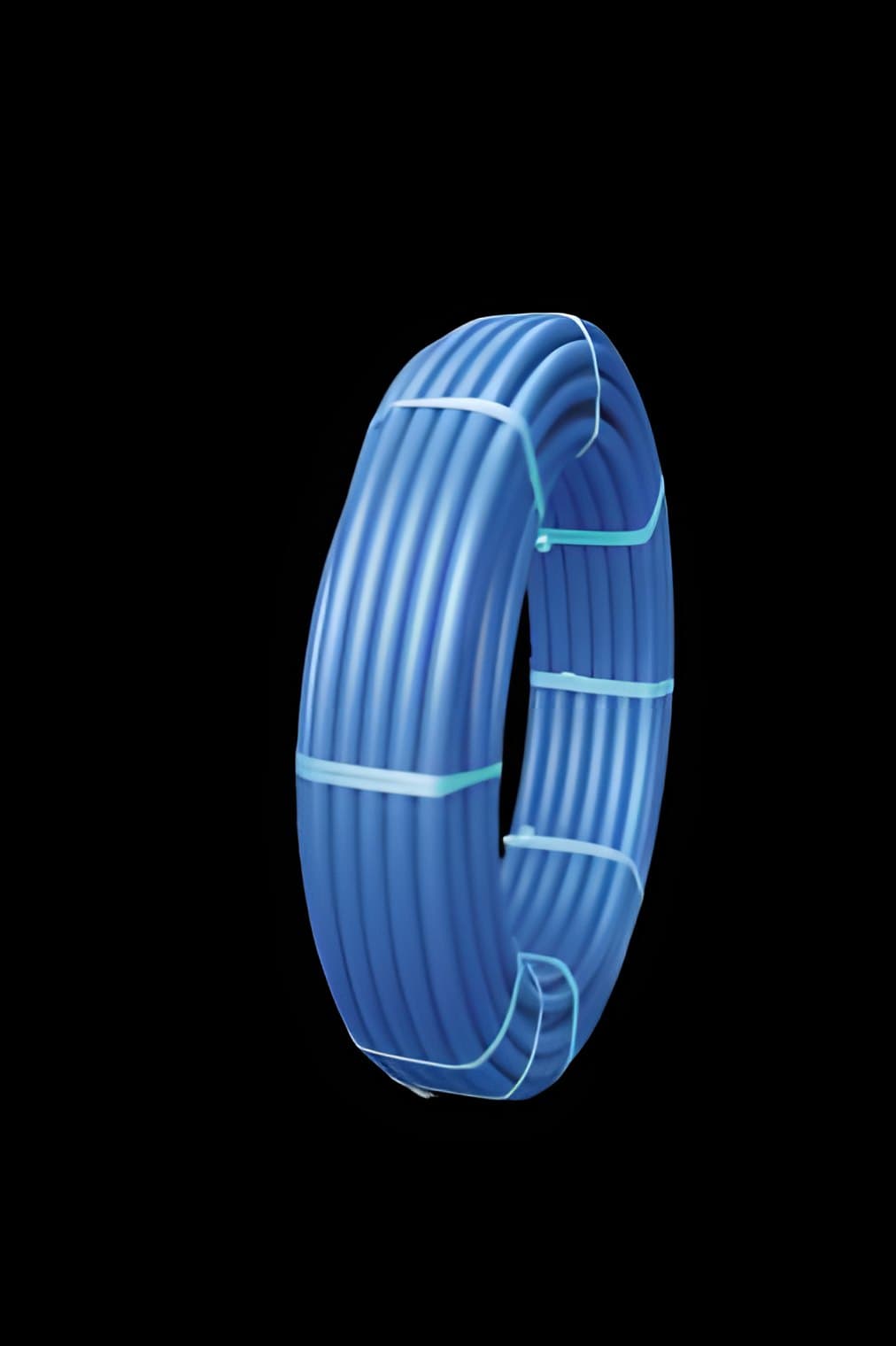
At a Glance
- Material
- High-density polyethylene, PE 100
- Application
- Potable water · buried mains and service lines
- Diameters
- 20 to 110 mm (outside diameter)
- Pressure classes
- 0.63 to 2.50 MPa (≈ 91 to 363 PSI)
- Format
- Coil — 200 m at 20 and 25 mm · 100 m from 32 to 110 mm
- Manufacturing
- Integrated plant management system
PE 100 Line Specifications
Diameters, Pressure Classes, and Coil Length
The whole range is PE 100. Outside diameter is produced inside a tolerance band, and every diameter comes in several pressure classes: the class is chosen by line pressure, not by diameter.
| Outside dia. (mm) | Material | Pressure classes (MPa) | Coil (m) |
|---|---|---|---|
| 20.00–20.30 | PE 100 | 1.60 · 2.00 · 2.50 | 200 |
| 25.00–25.30 | PE 100 | 1.25 · 1.60 · 2.00 · 2.50 | 200 |
| 32.00–32.30 | PE 100 | 1.00 · 1.25 · 1.60 · 2.00 · 2.50 | 100 |
| 40.00–40.40 | PE 100 | 0.80 · 1.00 · 1.25 · 1.60 · 2.00 · 2.50 | 100 |
| 50.00–50.50 | PE 100 | 0.63 · 0.80 · 1.00 · 1.60 · 2.00 · 2.50 | 100 |
| 63.00–63.60 | PE 100 | 0.63 · 0.80 · 1.00 · 1.25 · 1.60 · 2.00 · 2.50 | 100 |
| 75.00–75.70 | PE 100 | 0.63 · 0.80 · 1.00 · 1.25 · 1.60 · 2.00 · 2.50 | 100 |
| 90.00–90.80 | PE 100 | 0.63 · 0.80 · 1.00 · 1.25 · 1.60 · 2.00 · 2.50 | 100 |
| 110.00–111.00 | PE 100 | 0.63 · 0.80 · 1.00 · 1.25 · 1.60 · 2.00 · 2.50 | 100 |
The low classes only appear from 40 and 50 mm up: in the small diameters the minimum wall already delivers more pressure than a 0.63 MPa class would ask for. The 50 mm range does not include the 1.25 MPa class. 1 MPa ≈ 145 PSI, so the full range runs roughly 91 to 363 PSI.
How Wall Changes with Class — 20 mm Example
Same outside diameter, three pressure classes. What changes is the wall, and with it the weight per meter and the usable bore.
| Pressure (MPa) | Wall (mm) | Weight (kg/m) | Coil (m) |
|---|---|---|---|
| 1.60 | 2.00–2.30 | 0.110–0.124 | 200 |
| 2.00 | 2.30–2.70 | 0.122–0.140 | 200 |
| 2.50 | 3.00–3.40 | 0.153–0.161 | 200 |
The same logic holds across the range: a higher pressure class means more wall and more weight per meter at the same outside diameter. We pull the full wall and weight table from the plant for whatever diameter and class you need.
Where the PE 100 Line Operates
This is buried-infrastructure product. It sells to waterworks yards and municipal suppliers, not to a finish-plumbing counter.
Distribution mains
Municipal mains and branches from 63 to 110 mm, where a 100 m coil removes dozens of joints per block.
Service connections
Main to meter in 20, 25, and 32 mm — the short run that repeats more than any other on a network.
Rural and community water
Village systems and water boards, where terrain is irregular and coil flexibility saves fittings.
Land development
Internal networks in subdivisions and residential developments, laid before the road and the curb go in.
Waterworks yards
Stock by pressure class: a distributor holding 0.63 to 1.60 MPa in 63 and 110 mm covers most of the jobs that walk in.
Agricultural conveyance
Pressurized conveyance runs on farm. For low-pressure irrigation and portable use, PE hose is the right product.
Buying HDPE PE 100 Pipe Wholesale — FAQ
What does PE 100 mean?
It is the material grade, not a size and not a brand. It classifies the polyethylene resin by the design strength the wall is calculated against over fifty years. PE 100 carries more load than PE 80 at the same thickness, so for a given pressure it needs less wall and leaves more usable bore. The whole range on this line, 20 to 110 mm, is PE 100.
Why coils instead of rigid sticks?
Because the joint is the weak point of a buried line, and a coil is how you have fewer of them. One 100 m coil replaces sixteen 6 m sticks and fifteen joints. Polyethylene is also flexible: it follows the curve of the trench without direction fittings, which cuts both material and labor. At 20 and 25 mm the coil is 200 m; from 32 to 110 mm it is 100 m.
How do I pick the pressure class?
By the working pressure of the network plus whatever margin the design calls for — not by diameter. Every diameter comes in several classes: a higher class means more wall and more weight per meter on the same outside diameter. In the small diameters the classes start higher — at 20 mm the lowest is 1.60 MPa — because the minimum wall already delivers more than that. A practical conversion: 1 MPa is about 145 PSI.
How is it joined, and do you supply fittings?
Polyethylene is joined by butt fusion, electrofusion, or mechanical compression fittings, depending on site practice and the equipment on hand. This line is pipe: we do not publish an HDPE fittings catalog for it. If the order needs them, tell us the joining method and the sizes and we quote them separately.
Can it be used for sewer, or inside a building?
Neither. This is pressurized potable water pipe meant to go in the ground. Sewer runs by gravity and uses corrugated or PVC drain pipe with different geometry. And inside a building, pressurized runs are handled with PVC SCH 40, threaded PVC pressure pipe, or PP-R depending on the case — this line is not a building-interior product, and it is not for hot water.
What is the minimum order?
Coverage is by the container, not the single coil. If the diameter and class mix fills a dedicated PE 100 container, we book it that way; if not, it combines with the rest of the water and drainage line or with the plastics portfolio to reach a clean landed cost. Send diameters, classes, meterage, and destination and we put the configuration together.
Request a Wholesale Quote
Tell us what you need. We come back with a firm quote with incoterms — the team that builds it is the same team that answers your questions.